
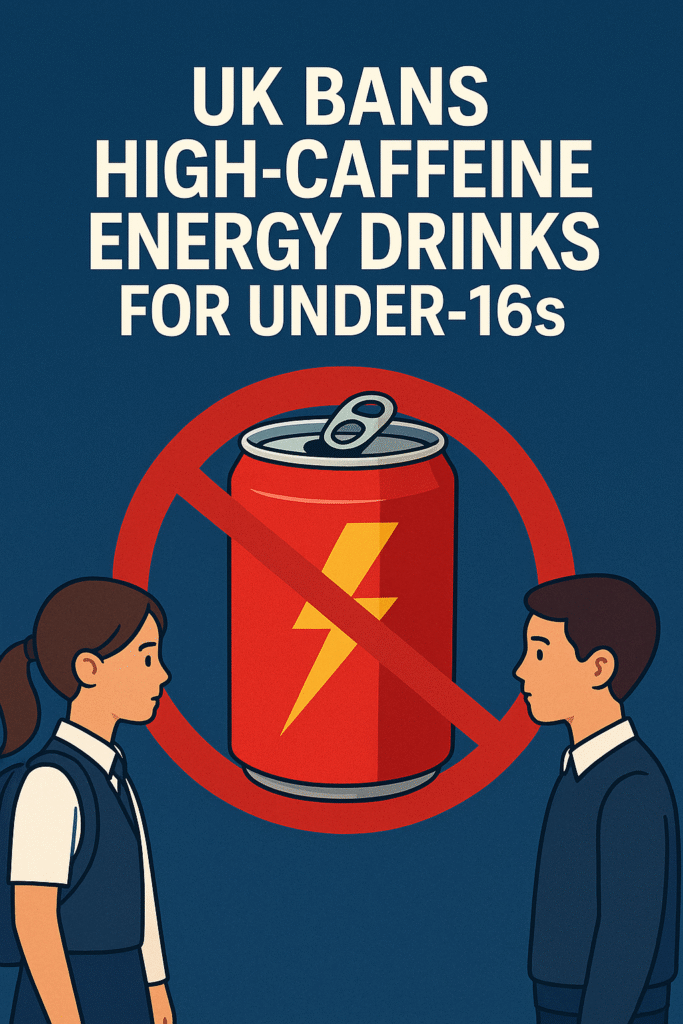
Imagine walking into a shop, grabbing your favorite fizzy can, and heading to the counter—only to be told, “Nope, sorry.” That’s the new reality for anyone under 16 in the UK, thanks to a bold new law. The government has officially put its foot down, making it as illegal to sell high-caffeine energy drinks to kids as it is to sell them cigarettes or alcohol.
It sounds wild, but from classrooms to corner shops, these drinks have been a teenage rite of passage for years. The UK just pulled the plug, and it’s a huge deal.
Why the UK Just Pulled the Plug on Energy Drinks?
The UK government’s ban on high-caffeine energy drinks for anyone under 16 is a clear move to protect kids. For years, health experts have been ringing the alarm bells about the side effects of these sugary, jittery concoctions. They’re not just a quick buzz; they’re linked to some serious issues.
The government’s reasoning is pretty simple: these drinks are basically an express ticket to trouble for developing bodies. They’re connected to:
- Weight gain and a higher risk of diabetes.
- Anxiety, mood swings, and sleep problems that can wreck a school night (and the next day).
- Heart palpitations and other heart-related concerns in young people.
- Addiction-like behavior because of the potent mix of sugar and caffeine.
Why This Ban Is a Bigger Deal Than You Think
The UK is now part of a growing club of countries that have said “no” to energy drinks for kids. They’ve decided that children’s health is more important than a brand’s bottom line. The old way of doing things, with just a little warning label, wasn’t working. Kids were still chugging them down, leading to the health and behavioral problems that parents and teachers have been complaining about for years. This is the government stepping in to make a definitive statement.
Are Energy Drinks Banned Everywhere?
The UK isn’t alone. Some countries already have restrictions:
- France & Norway: Previously banned Red Bull until EU lifted the block.
- Lithuania & Latvia: Full bans on under-18 sales.
- US & Canada: No nationwide ban, but schools often restrict sales.
This new UK law places Britain among the stricter nations when it comes to kids’ health.
What This Means for Kids, Parents, School and Brands
For parents, this ban is a huge win. The days of fighting with your teen about buying a Monster are over. Now, the government has your back. For schools, it’s a game-changer. Teachers will have official support to keep these drinks out of the classroom, hoping for fewer jittery, distracted students.
But for brands, this is a wake-up call. The ban will cut into a big chunk of their market, forcing them to find new ways to sell to adults or rethink their products entirely.
The Bigger Picture
This isn’t just about a new rule at the checkout. The UK’s decision is a big deal for a few key reasons:
- Shifting Responsibility: The ban takes the fight out of parents’ hands and puts the burden directly on the government and retailers. No more debates in the grocery aisle—the law is the law.
- Setting a Global Example: When a major country like the UK makes a bold public health move, the rest of the world takes notice. This could be the spark that makes other nations reconsider their own rules.
- A Win for Public Health: This is a clear statement that when it comes to the health of the next generation, corporate profits can’t come first. It’s a shot across the bow for any brand that markets unhealthy products to kids..

FAQs on Energy Drink Ban
Are energy drinks banned for under-16s in the UK?
Yes. As of 2025, it is illegal for retailers to sell high-caffeine energy drinks to anyone under the age of 16 in the UK.
Why should energy drinks be banned?
Because they are linked to a host of health problems in young people, including obesity, anxiety, sleep issues, and heart palpitations.
Why shouldn’t energy drinks be banned?
Some people believe that adults should have the freedom to make their own choices, and that parents should be responsible for what their children consume.
Which other countries have banned energy drinks for kids?
Countries like Lithuania and Latvia have national bans for minors. Other countries, like France and Norway, have had similar restrictions in the past.
Are energy drinks banned in the US?
No, there is no nationwide ban in the US, but many schools and local communities have their own restrictions.
How long do energy drinks stay in your system?
The effects of caffeine can last for 4 to 6 hours, but this can vary depending on a person’s metabolism.
Can energy drinks be fatal?
While it’s rare, consuming an extremely high amount of caffeine in a short period of time can be fatal. It’s a risk, especially for young people with smaller bodies.
Are energy drinks banned by the NCAA?
The NCAA doesn’t ban energy drinks entirely but discourages athletes from consuming them due to high caffeine levels. Certain stimulant ingredients (if present) could trigger positive drug tests.
Are energy drinks banned in France?
No, France hasn’t banned energy drinks. They were restricted in the past (1990s–2008) due to health concerns, but now they are legally sold with health warnings.
Are alcoholic energy drinks banned?
Yes, premixed alcoholic energy drinks (like Four Loko in its original formula) have been banned or reformulated in the US and EU because caffeine + alcohol was deemed unsafe.
Why energy drinks should be banned?
Reasons include:
- Can cause addiction and overconsumption
- High caffeine linked to heart problems
- Increased risk of anxiety and sleep issues
- Dangerous for children and teens
General Energy Drink Questions
Prime energy drinks
Prime is a popular energy drink brand co-founded by Logan Paul and KSI. Some countries flagged its caffeine content as too high for kids.
Energy drinks
Beverages with caffeine, sugar, and stimulants designed to boost energy and alertness.
Natural energy drinks
Made with natural caffeine sources like green tea, yerba mate, or guarana.
Healthy energy drinks
Sugar-free, low-caffeine alternatives that use natural ingredients.
Energy drinks UK
Popular brands include Monster, Red Bull, Prime, and Relentless. Now regulated for under-16 sales.
Are energy drinks bad for you?
Excessive use can be harmful, especially for children, pregnant women, and people with heart issues.
Monster energy drinks
One of the largest global brands, available in multiple flavors, but criticized for high caffeine and sugar.
Cheap energy drinks
Supermarket-owned brands or local products often contain the same caffeine but cost less.
How to get rid of stomach ache from energy drinks?
- Drink water
- Eat something light
- Rest
- Avoid more caffeine
Can energy drinks kill you?
In rare cases, yes. Excessive consumption has been linked to heart attacks, seizures, and even deaths.
Disclaimer:
FlappyNews delivers fact-based stories with a satirical twist. Don’t take our jokes seriously, but do take the facts seriously.
1 thought on “UK Bans High-Caffeine Energy Drinks for Under-16s: What It Means for Kids, Parents & Global Energy Drink Rules”