
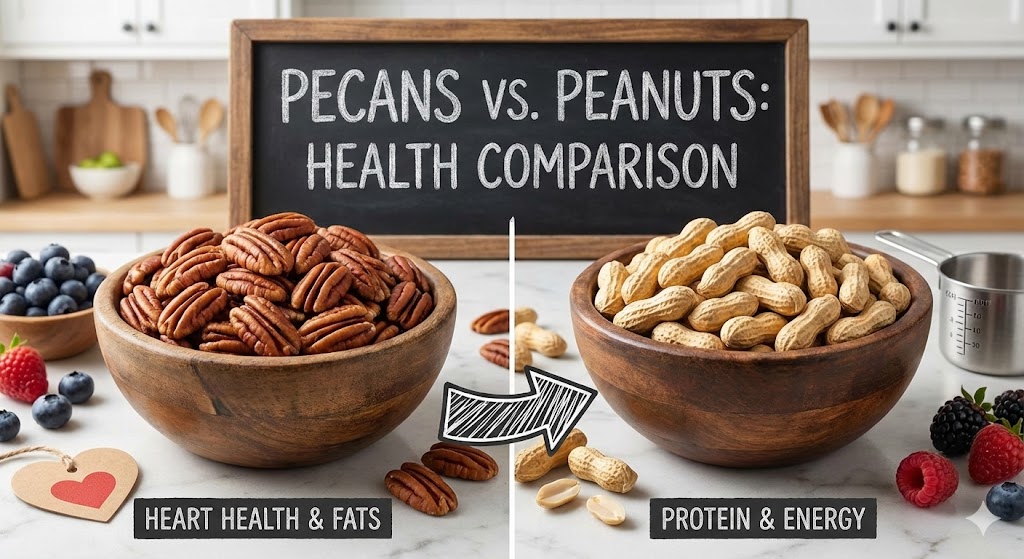
When it comes to pecans vs peanuts, the health differences may seem small, but they matter more than most people realize. Both are rich in nutrients linked to heart health, yet they differ in fats, protein, fiber, and vitamins. Knowing the differences helps you pick the one that best fits your health goals.
Pecans vs Peanuts: Nutrition Comparison
At a glance:
- Pecans:
- Higher in monounsaturated fats which support heart health
- More overall fat and calories per serving
- Slightly more dietary fiber
- Peanuts:
- Technically legumes, but nutritionally similar to nuts
- Higher in protein than pecans
- Contains key nutrients like folate and magnesium
In a 1-ounce comparison, pecans tend to provide more heart-healthy fats, while peanuts deliver a stronger protein punch.
Pecans vs Peanuts for Heart Health
Both nuts offer benefits for cardiovascular health:
- Healthy fats: Pecans are especially rich in monounsaturated fats associated with reduced LDL (“bad”) cholesterol.
- Antioxidants: Both contain plant compounds that help reduce oxidative stress, which can benefit heart function.
- Fiber & Cholesterol: Nuts like pecans and peanuts contain fiber and plant sterols linked to lower cholesterol levels.
The American Heart Association and research reviews suggest consuming a moderate amount of nuts — about 1 ounce per day — as part of a heart-healthy diet, due to their favorable fat and nutrient profiles.
Protein and Diet Goals
If your priority is protein, peanuts have an edge. They’re higher in protein per ounce compared with pecans, making them a better choice for muscle building or plant-based diets.
Pecans, while lower in protein, shine in healthy fats and antioxidants, which are important for long-term cardiovascular support.
Fiber, Vitamins, and Minerals
Both nuts carry fiber and micronutrients, but they differ:
- Pecans: Slightly more fiber and manganese (important for metabolism and bone health).
- Peanuts: More iron, magnesium, potassium, and phosphorus — all essential for energy and muscle function.
These nutrient differences are small but can influence your choice depending on dietary needs.
Calories and Portion Control
Because pecans are higher in overall fat, they also come with more calories per ounce than peanuts. That doesn’t mean they’re “bad”, it simply highlights the need for portion control, especially if weight management is a goal.
Bottom Line: Which Should You Pick?
Neither nut is objectively “better”, it depends on your goals:
- Choose peanuts: If you want more protein and a cost-effective, nutrient-dense snack.
- Choose pecans: If you’re focused on heart-healthy fats and antioxidants.
- Best balance: Include both in moderation in a varied diet.
Both pecans and peanuts can fit into a balanced eating pattern that supports heart health, blood sugar control, and overall nutrition when eaten mindfully and without excessive added salt or sugar.
This pecans vs peanuts comparison shows that while both offer benefits, their nutritional strengths are slightly different.
Quick Tips for Including Nuts in Your Diet
- Add a small handful of nuts to oatmeal or salads.
- Use nut butters (unsweetened) on toast or fruit.
- Sprinkle chopped nuts on yogurt or smoothie bowls.
Moderation matters — nuts are calorie-dense, so a standard serving size is about 1 ounce (28g).
Whether you prefer pecans for their heart-healthy fat profile or peanuts for their protein and nutrient content, both have a place in a nutritional diet. The best choice is often a combination of nuts, enjoyed regularly and in sensible portions.
In the pecans vs peanuts debate, the healthier choice ultimately depends on your diet goals and portion control.
Disclaimer:
FlappyNews delivers verified facts, expert insights, and thoughtful analysis with a light, engaging tone. Opinions are clearly labeled and intended for discussion and perspective, not professional advice. Readers should independently verify details before making decisions. Content aims to inform, educate, and entertain, exaggeration and unverified claims are avoided.